
Tsingy de Bemaraha: How to Visit and What to Expect
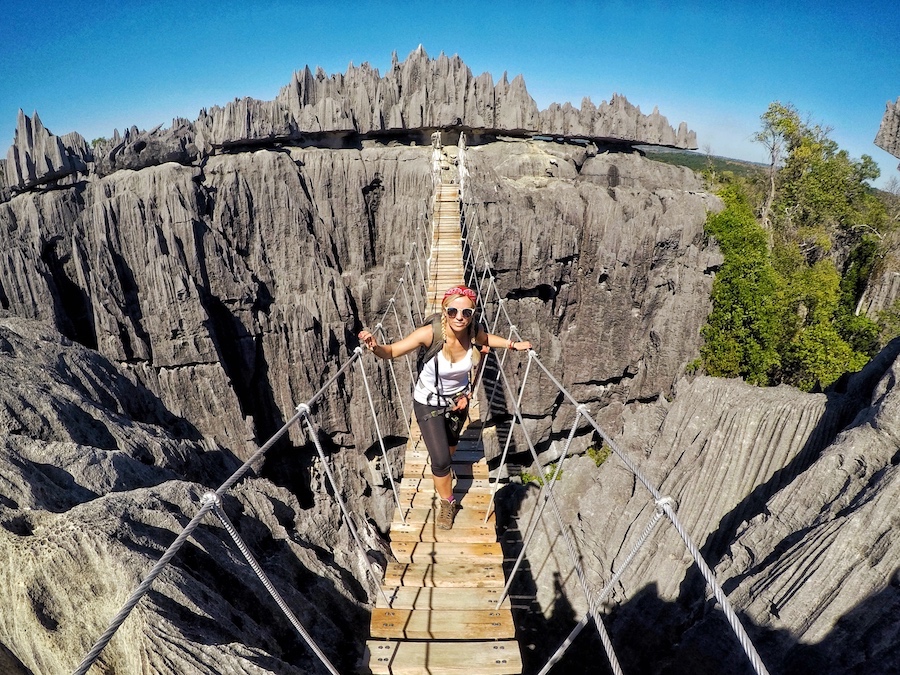
Tsingy de Bemaraha National Park is defined by dense limestone formations rising in sharp vertical ridges. It is one of Madagascar’s most visually distinctive landscapes. The scale and density of the rock formations make it unlike anywhere else in the country.
Located several hours north of the Avenue of the Baobabs, Tsingy is typically reached as part of the same overland route through western Madagascar. The final stretch involves slower roads and at least one overnight stay nearby. You also need a registered guide, and access is seasonal.
This page explains how to visit, what to expect inside the park, and how Tsingy is typically incorporated into a wider western Madagascar itinerary.
Is Tsingy de Bemaraha Worth Visiting

Visiting Tsingy de Bemaraha National Park involves more than the hours spent inside the park. From Morondava, the journey typically takes three days, including the return drive, with slow roads and river crossings along the way. Most visitors stay at least one night in Bekopaka.
Inside the park, routes are guided and structured. The Grand Tsingy circuit includes ladders, clipped safety lines, narrow caverns and exposed sections across sharp limestone ridges. It is not technically difficult, but it is physical, and comfort with heights makes it easier.
Time is the main factor to consider. Reaching Tsingy requires planning, and the travel is part of the overall visit rather than a simple add-on.
What to Expect When Visiting Tsingy de Bemaraha
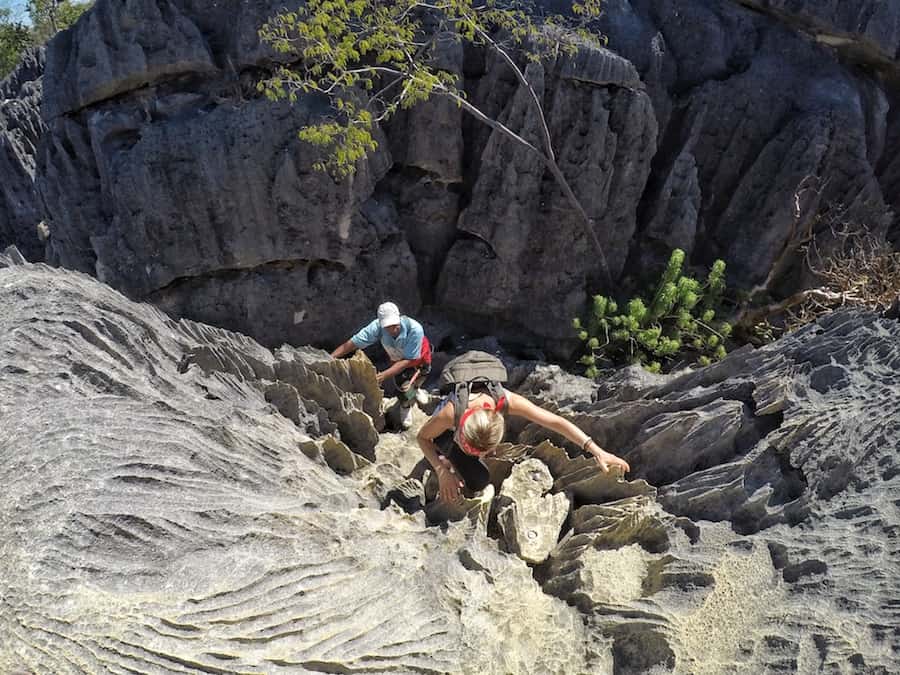
Access to Tsingy de Bemaraha National Park is by registered guide only. On arrival in Bekopaka, visits are arranged through the park office, where you choose between the Grand Tsingy, the Petit Tsingy, or both on the same day.
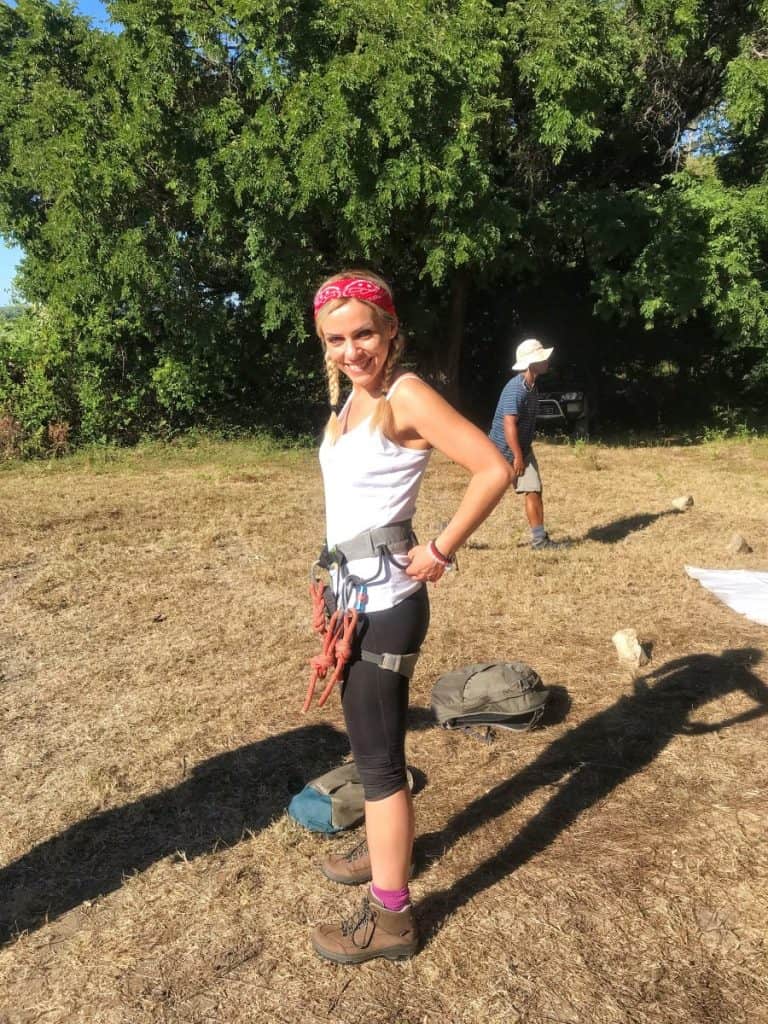
The Grand Tsingy is the longer and more physically involved circuit. Harnesses are provided and must be worn on certain sections. The full circuit typically takes around four hours.
The Petit Tsingy is shorter and less exposed. There are no harness sections, and the rock formations are lower and more compact. It still involves uneven ground and some scrambling, but it is less physically demanding overall.
Wildlife sightings vary. Lemurs tend to be seen earlier in the morning, while smaller species such as mongooses, tenrecs and reptiles are occasionally spotted along the forested sections between the limestone ridges.
Visits are structured and timed. You follow marked routes with your guide, and independent exploration is not permitted.
Petit Tsingy vs Grand Tsingy

Within Tsingy de Bemaraha National Park, visitors choose between two main circuits: the Grand Tsingy and the Petit Tsingy. Both follow marked routes with a guide, but the scale and physical demands differ.
The Grand Tsingy is the larger and more exposed route. Sections include metal ladders, fixed safety lines, narrow rock corridors and suspension bridges above the limestone formations. Harnesses are required on certain sections. The standard circuit takes around four hours and involves steady climbing and uneven terrain.
The Petit Tsingy is shorter and lower in elevation. Harnesses are not required, and the limestone formations are more compact. The route still involves uneven ground and some scrambling, but it is less exposed overall and typically takes around two hours.
Both routes pass through forested sections between the rock formations, where wildlife is occasionally spotted. The Grand Tsingy is generally chosen by visitors with a full day available, while the Petit Tsingy can be completed in a shorter timeframe or combined with the Grand circuit in one day.
How to Get to Tsingy de Bemaraha
Reaching Tsingy de Bemaraha National Park usually begins in Morondava. From here, the drive to Bekopaka takes around 8 to 10 hours, depending on road and river conditions.
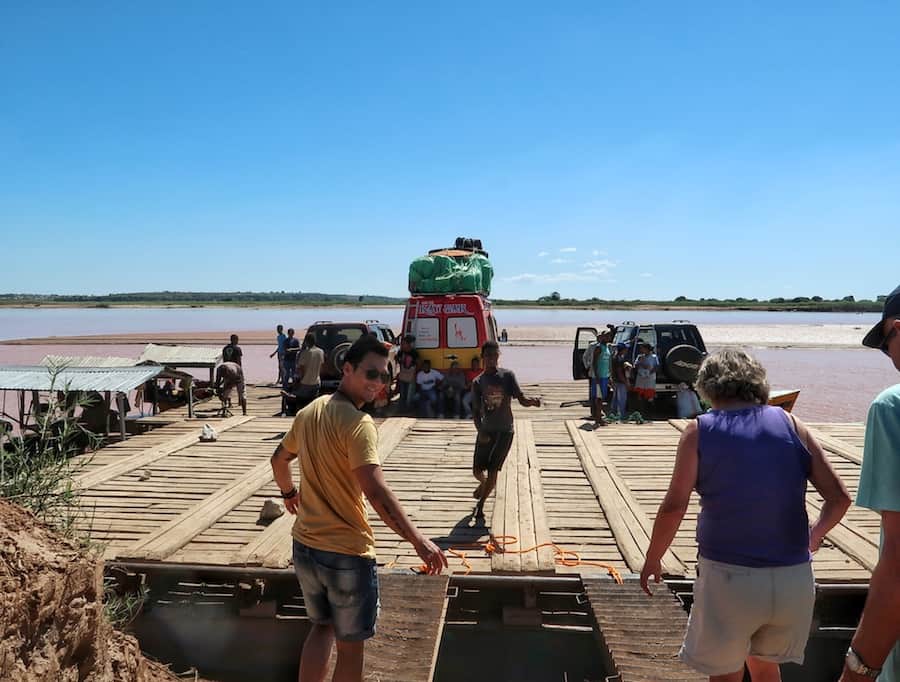
We left Morondava after sunrise, having stopped earlier at the Avenue of the Baobabs before the road north. The first stretch is paved, but it quickly gives way to long sections of dirt road, shallow stream crossings and two larger river ferries. One of these operates only once enough vehicles have gathered, so waiting times vary.
Along the way, small roadside cafés offer simple meals. Expect basic facilities rather than planned rest stops. The journey is slow but steady, with villages and baobab groves breaking up the drive.
A 4×4 vehicle is standard for this route. Most visitors arrange a driver for a minimum of three days: one day to reach Bekopaka, one full day for the park visit, and one day to return.
The distance is manageable. It is the pace that defines the day.
Best Time to Visit Tsingy de Bemaraha
Access to Tsingy de Bemaraha National Park is seasonal. The park is typically closed during the rainy season from December to March, when roads become flooded, and river levels rise.
The dry season begins around April, when conditions gradually improve, and overland travel becomes more reliable. Even at the start of the dry season, road conditions can vary, so confirming access locally before departure is sensible.
Wildlife sightings are generally better earlier in the morning, particularly for lemurs, when temperatures are lower.
Most visits take place between May and October, when roads are firm, and the park circuits are fully operational.
Things to Know Before Visiting
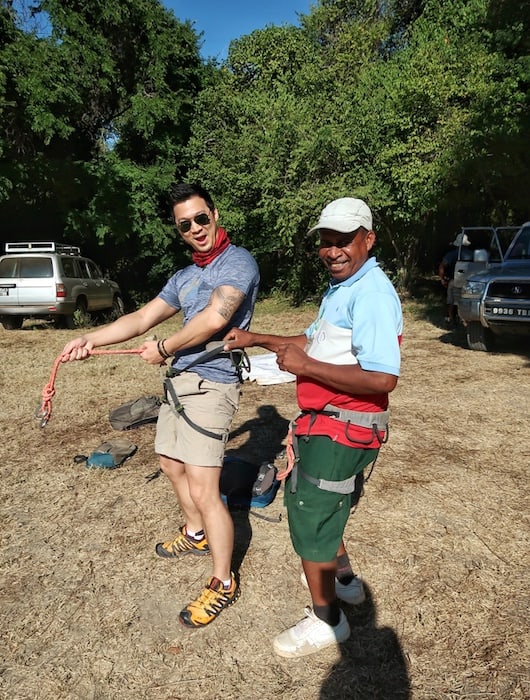
A registered guide is mandatory inside Tsingy de Bemaraha National Park. Guides are assigned at the park office in Bekopaka, and circuits are completed as part of a group or small party. English levels vary.
Some sections require the use of fixed safety lines and harnesses. While the routes are maintained, footing can be uneven, and some sections are narrow.
The journey to Bekopaka includes river crossings that operate on vehicle demand rather than fixed departure times. Waiting is normal, particularly during busier periods.
Accommodation in Bekopaka is limited and basic compared to larger towns. Booking ahead during the peak dry season is advisable.
Mobile signal is inconsistent, and facilities are simple. Cash is required for park fees, guides and local payments.
Guides are paid separately from the park entry fee.
How It Fits Into a Madagascar Itinerary

Tsingy de Bemaraha National Park is typically visited as part of a western Madagascar route beginning in Morondava. Most itineraries combine the journey with stops at the Avenue of the Baobabs and nearby reserves such as Kirindy Forest.
From Morondava, travellers allocate three days to reach Bekopaka, visit the park, and return. It is rarely combined with eastern Madagascar highlights within the same short trip due to the travel time between regions.
When planning a route through Madagascar, Tsingy is usually included when the west coast is already part of the journey. Travel between regions is slow, so grouping destinations geographically keeps the schedule manageable.