
Flamingo Beach Aruba: Is It Worth It? How to Visit & What It Costs
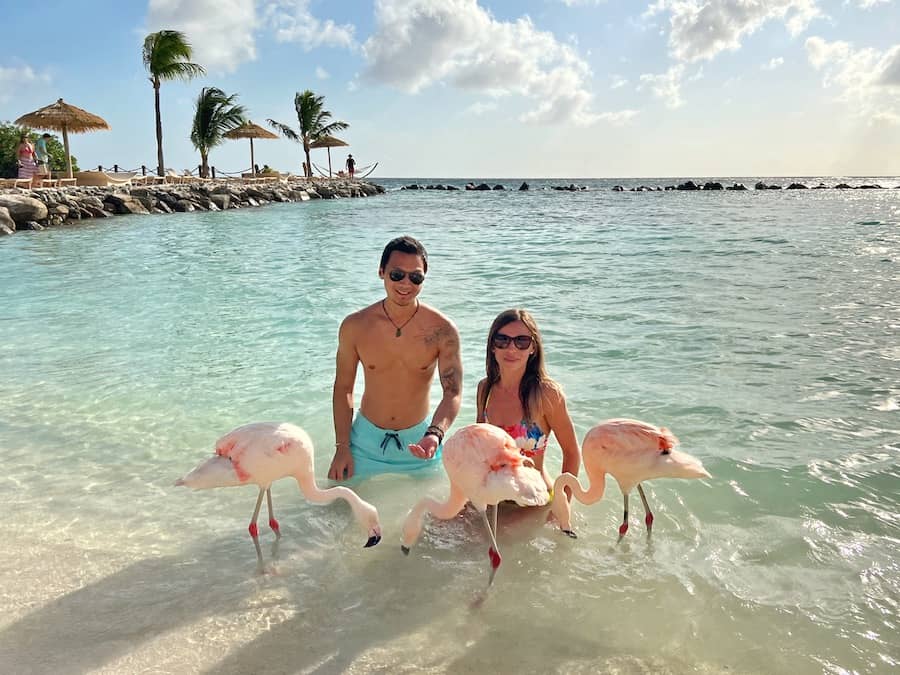

Flamingo Beach Aruba is one of the island’s most recognisable sights. Pink flamingos, white sand, shallow turquoise water. You’ve probably seen it online more than a few times.
What’s less obvious is that you can’t just turn up and expect to be surrounded by pink birds. Flamingo Beach sits on Renaissance Island, owned by the Renaissance Aruba Resort, and access is limited. You either stay at the hotel, book a day pass in advance, or visit as part of a spa treatment. It takes planning, and it isn’t cheap.
I’ve been back to Aruba many times over the years, and we finally decided to visit Flamingo Beach on our last trip. It’s not the main reason to visit Aruba. The island’s public beaches are already excellent. But as a one-off experience, it can be a very good day.
Here’s what it’s actually like, how to visit, what it costs, and whether it makes sense for your trip.
What Is Flamingo Beach Aruba?
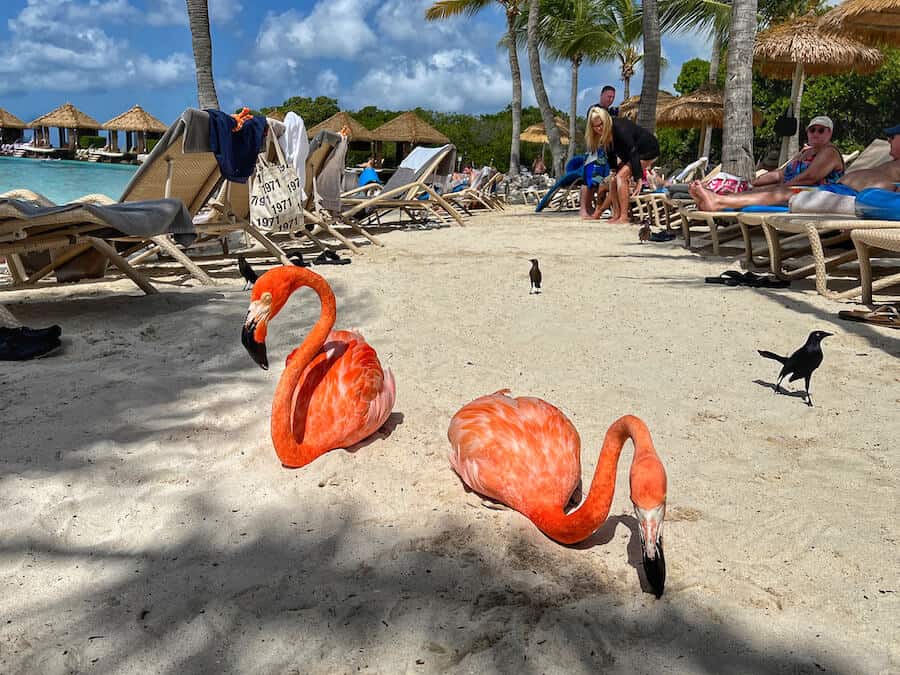
Flamingo Beach is not part of Aruba’s mainland coastline. You won’t find flamingos wandering along Eagle Beach, Palm Beach, Baby Beach, or anywhere else on the island’s public shores.
Instead, Flamingo Beach sits on Renaissance Island, a small private island just off Oranjestad. Access is limited to guests of the Renaissance Aruba Resort and those who secure a day pass or spa booking.
The flamingos themselves are not native to Aruba. They live on the island and move freely around the beach and boardwalk areas, making this stretch of sand instantly recognisable.
This isn’t a wild, untouched beach. It’s a managed private island experience. That distinction matters when deciding whether it’s right for your trip.
Is Flamingo Beach Aruba Worth It?

Flamingo Beach is worth it for some trips and easy to skip on others. It depends on what you want from your time in Aruba.
Anyone expecting to wander onto a public beach and find flamingos will be disappointed. This is a private, managed experience on Renaissance Island, and it requires planning.
If you genuinely want to see the flamingos up close and spend a day somewhere a little different from Aruba’s usual beaches, it does exactly what it promises. The setting is beautiful, and once you’re there, the pace is slow. We were perfectly happy spending the day on a lounger, swimming, and ordering drinks in the sun while the flamingos wandered past when they felt like it.
We’ve been back to Aruba many times, and we chose to visit Flamingo Beach deliberately on our last trip. For us, it was worth doing once. That said, you won’t feel like your trip is lacking if you skip it. Aruba’s public beaches are already excellent.
It isn’t cheap, and it’s not something you drop into for an hour. You’re committing to the boat transfers and settling in for most of the day. But treated as a relaxed beach day rather than just a photo opportunity, it can make sense.
If the flamingos are the reason you’re researching it, you’ll likely enjoy it. If they’re not, there are easier and cheaper ways to spend a day on the island.
How to Visit Flamingo Beach Aruba & What It Costs
There are three ways to access Flamingo Beach, and the cost varies significantly depending on which route you choose. Access is via the resort’s private boat transfer from Oranjestad, which runs throughout the day. You’ll need to secure one of the following options in advance.
1. Stay at the Renaissance Aruba Resort
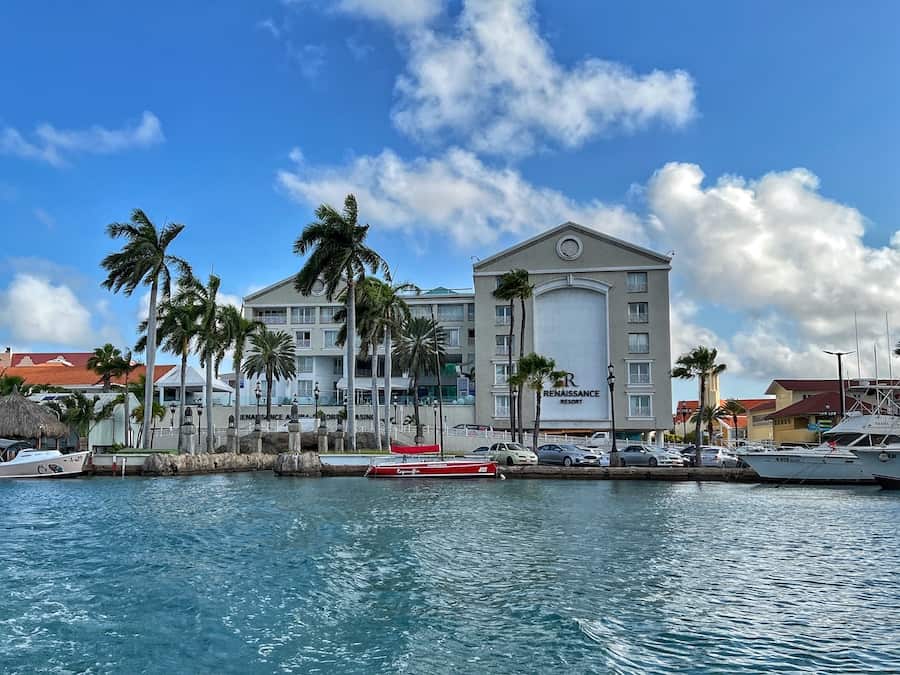
Staying at the Renaissance Wind Creek Aruba Resort is the simplest option. Hotel guests have unlimited access to Renaissance Island, including both Flamingo Beach and Iguana Beach, plus the boat transfers.
Room rates typically start around $450 to $500 per night for two people, depending on the season. Sharing a room reduces the per-person cost, and Marriott Bonvoy points can make this option more reasonable.
It’s the most expensive route overall, but it guarantees access and removes the stress of securing a day pass.
2. Renaissance Island Day Pass
If you are not staying at the hotel, you can try to secure a Renaissance Island day pass.
Day passes cost around $125 per adult and $62.50 for children aged five to twelve. Children under four are free with an adult. The pass usually includes boat transfers, one lunch, one drink, towels, and access to basic water equipment.
Passes are released weekly, typically on Saturdays, for the following week only. Availability depends on hotel occupancy, and they sell out quickly. This is the cheapest official option, but also the least predictable.
If Flamingo Beach is high on your list, relying solely on a day pass can be risky.
3. Spa Cove Treatment Package

For travellers who want guaranteed access without booking a room, this is usually the most reliable route.
Booking a treatment at Spa Cove, part of the Okeanos Spa, on Renaissance Island includes access to the island for the day. Treatments start at around $250 per person for a 50-minute massage, with additional boat transfer fees for non-hotel guests. A couple’s treatment works out slightly better value per person.
It costs more than a day pass, but you can book in advance and guarantee access without staying overnight. For shorter trips, that reliability can justify the extra spend.
What’s Included With a Day Pass
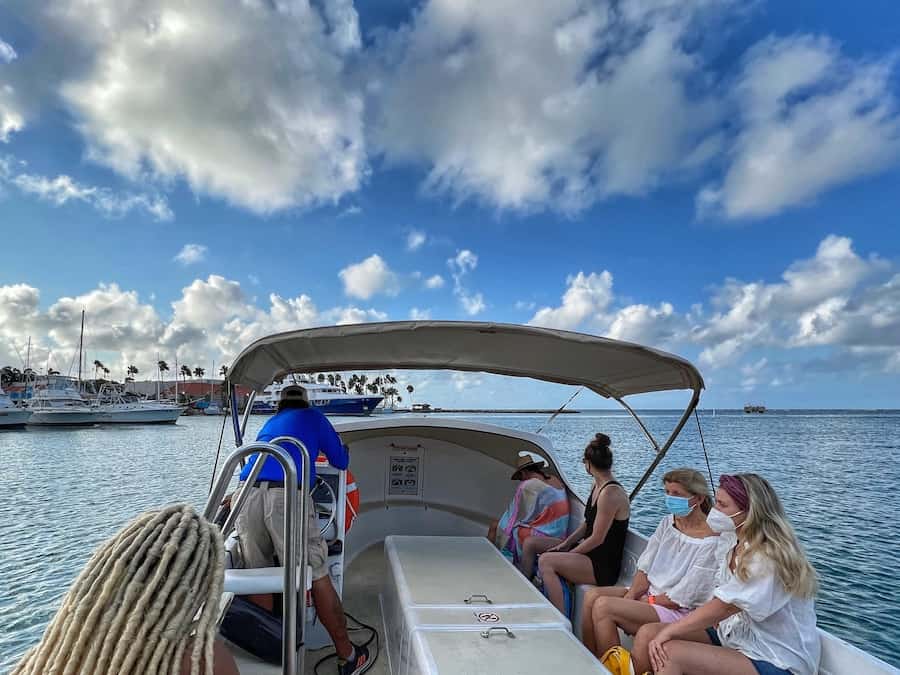
A Renaissance Island day pass includes more than just access to Flamingo Beach.
Typically included:
- Return boat transfers
- Access to both Flamingo Beach and Iguana Beach
- One lunch and one drink
- Towels
- Use of loungers and umbrellas
- Basic water equipment, such as floats or snorkelling gear
Extra food and drinks are charged separately. Spa treatments and cabana rentals are not included.
For a full beach day, most essentials are covered. Beyond that, you’re paying for extras.
What to Expect on Renaissance Island
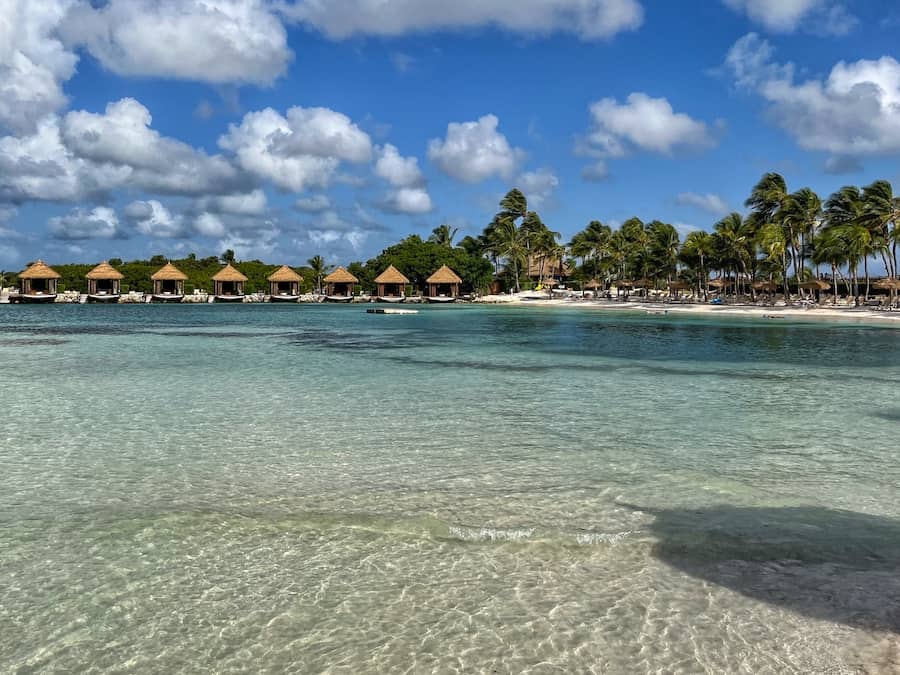
Renaissance Island has two beaches, and it’s surprisingly easy to head to the wrong one when you first arrive. We stepped off the boat, claimed a couple of loungers, and spent a good few minutes wondering why there were no flamingos and barely any people around. The boat drops most visitors near Iguana Beach, but the flamingos are on the other side.
Flamingo Beach
Flamingo Beach is the smaller, adults-only stretch of sand where the flamingos roam. It’s the beach most people come for.
Despite the online hype, it doesn’t usually feel chaotic, especially earlier in the day. It’s compact, with shallow clear water, loungers lined along the shore, and a mix of palm shade and sun. Most people settle in for the day, swim, order drinks, and wait for the flamingos to wander past when they feel like it.
The flamingos are noisier and slightly less graceful than you might expect. They move in small groups, ignore people when they want to, and rarely pose neatly on demand. Getting good photos is harder than it looks. The flamingos don’t pose on cue, and there’s usually a small crowd hovering nearby. Patience matters more than angles.
Children are allowed between 9am and 10am. Outside of that window, it’s adults only.
Iguana Beach
Iguana Beach is larger and family friendly. It’s also where Papagayo Bar & Grill is located.
Because most visitors head straight to see the flamingos, this side often feels quieter. It has a similar calm lagoon setup, more space to spread out, and a noticeably more relaxed atmosphere.
Flamingos sometimes wander over, but they’re not guaranteed. Iguanas, despite the name, also appear when they feel like it.
Which Beach Is Better?
If you’re there for the flamingos, you’ll spend most of your time on Flamingo Beach.
If you’re visiting with children, or you prefer more space and fewer people, Iguana Beach usually feels calmer. It’s easy to move between the two during the day.
Most day pass lunches are served on Iguana Beach, so you’ll naturally drift back and forth.
Best Time to Visit Flamingo Beach Aruba
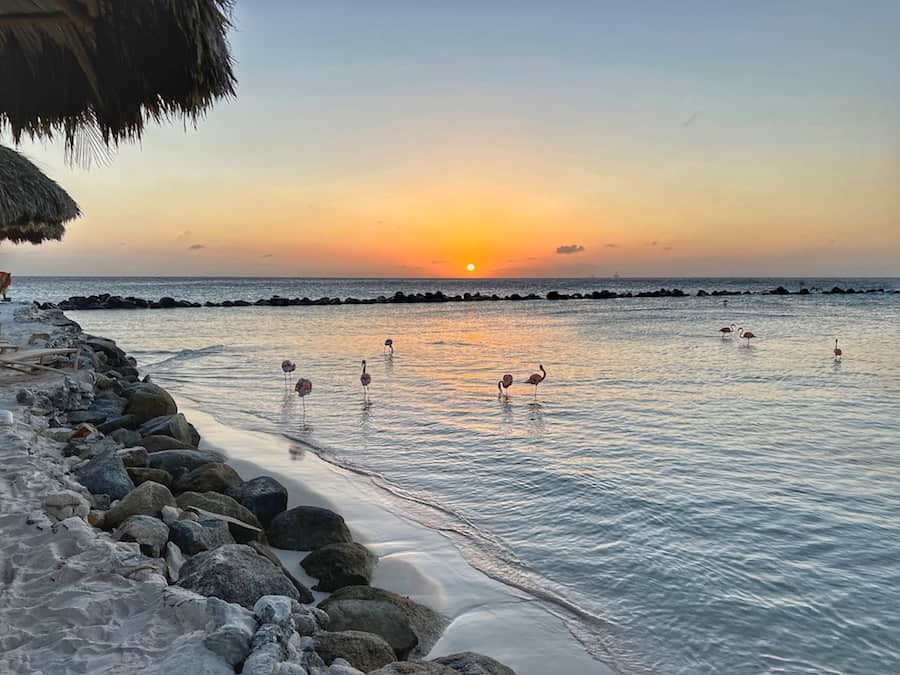
Timing makes a noticeable difference at Flamingo Beach. The same stretch of sand can feel calm and spacious or busy and slightly chaotic, depending on when you arrive.
Early Morning
Early morning is the best time to go, especially if photos matter. The first boats arrive when the light is softer, loungers are still available, and the flamingos tend to wander more freely. It feels easier and less crowded.
If you’re visiting on a day pass, arriving early also makes sense financially. You’re paying for the day, so you may as well use it.
Late Morning to Midday
By late morning, more day pass visitors arrive, and the beach becomes noticeably busier. It’s still manageable, but you’ll see more people waiting for photos and fewer shaded spots available.
This is also when the sun is strongest, and shade becomes more valuable.
Afternoon
Afternoons can feel calmer again as some day-pass visitors start to leave. The trade-off is harsher light and a quieter stretch of beach. If photography isn’t a priority, this can still be a pleasant time to visit.
Hotel guests have more flexibility and can come and go throughout the day. Day pass holders are more committed to making the most of their allotted hours.
Weekdays and Wind
Midweek visits generally feel quieter than weekends. Aruba is breezy year-round, which keeps temperatures manageable but can affect water conditions slightly. Boat transfers continue to run, even on windier days.
Taking Photos With the Flamingos
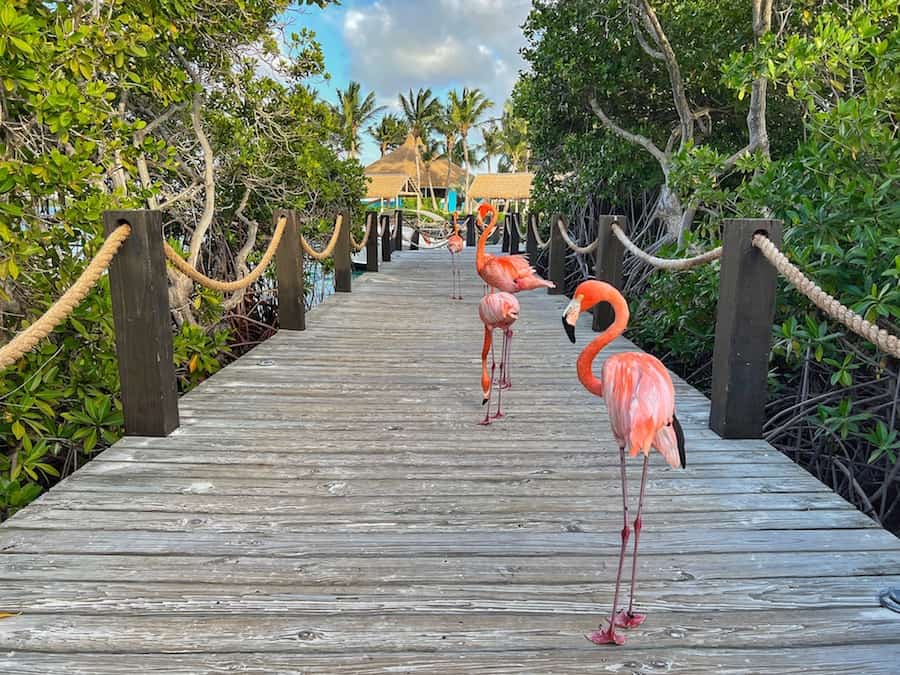
If you’ve gone to the effort of getting to Flamingo Beach, chances are you want at least one decent photo. Online, it can look effortless. In reality, it depends entirely on the birds and how patient you are.
The flamingos roam freely and don’t pose on demand. They aren’t there specifically for photos. Sometimes they’ll wander right past you. Other times, they’ll ignore everyone completely. You’re adjusting to them rather than directing the moment.
Good photos are possible, but timing and patience matter more than angles.
Practical Tips
Arriving earlier in the day helps. The beach is quieter, the light is softer, and the flamingos tend to move around more.
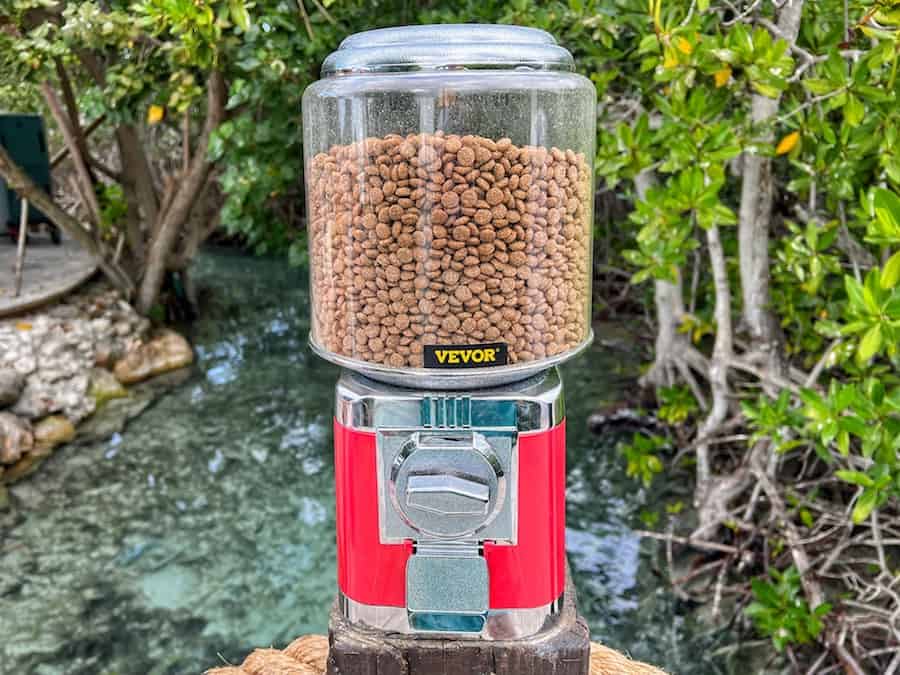
There’s a small food dispenser near the entrance where you can buy approved feed. It takes coins, though you can usually get change from Papagayo Bar & Grill. Feeding isn’t guaranteed to work, but it can encourage them to come closer.
Standing calmly in the shallow water and waiting often works better than hovering nearby. Getting lower, either sitting or kneeling, also helps. Sudden movements and chasing never do.
One thing we noticed was that the paler flamingos seemed slightly more approachable. Their colour comes from their diet, and younger birds are often lighter pink. Whether that affects temperament or not, they felt less territorial than some of the deeper pink birds.
Above all, don’t rush it. You’re there for hours, not minutes. Treat a good photo as a bonus rather than the sole objective.
Are the Flamingos Well Looked After?
It’s fair to wonder how the flamingos are kept.
The flamingos on Renaissance Island are not wild, but they’re also not confined. They move freely around the beach and boardwalk areas and are not herded into position for photos. Staff intervene only when necessary, and the birds have access to food and fresh water throughout the day.
You’ll find online speculation about wing clipping and how they arrived on the island. There’s no clear public documentation explaining the full history. Wing clipping, when used in managed environments, is a standard practice and not inherently harmful.
From what we observed, the flamingos largely dictate their own interactions. They approach when they want to and ignore people when they don’t. It does not feel exploitative in the way some animal attractions can.
Flamingo Beach vs De Palm Island
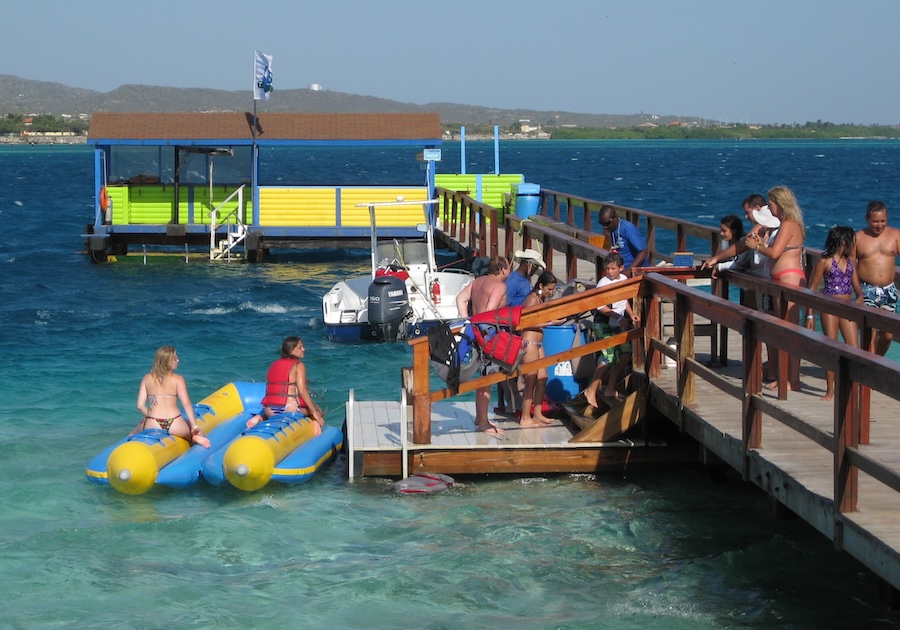
Flamingo Beach and De Palm Island are often compared because they’re two of Aruba’s best-known paid experiences. They offer very different kinds of days.
Flamingo Beach is centred around one thing. The flamingos. It’s smaller, slower, and built around atmosphere rather than activity. Most people swim, sit in the sun, order a drink, and wait for the birds to wander past. If you’re expecting entertainment or structure, it can feel quiet.
De Palm Island is the opposite. It’s larger, busier, and activity-driven. Snorkelling, waterslides, organised experiences, and an all-inclusive setup keep the day moving. It suits families and anyone who prefers a more structured experience.
It’s not a question of which is better. It’s whether you want a calm beach day with a novelty element, or a packed schedule built around activities.
What to Bring to Flamingo Beach
You don’t need much for Flamingo Beach, but a few small things make the day easier.
Towels, loungers, and basic facilities are already provided.
- Sunscreen – Shade is limited, especially on Flamingo Beach itself, and the sun is strong even on breezy days.
- Coins – The bird food dispensers take coins, and it saves time not having to hunt for change.
- A card – Extra drinks and snacks are paid separately.
- A hat – You’ll likely be in the sun for several hours.
- A camera or phone with some zoom – Flamingos do not always wander close.
- Patience – The best moments tend to happen when you stop trying to force them.
There’s no need to bring food or drinks unless you want something specific. Everything essential is already on the island.
FAQs About Flamingo Beach Aruba
Here are answers to the questions that come up most about visiting Flamingo Beach.
How much does it cost to go to Flamingo Beach?
A Renaissance Island day pass typically costs around $125 per adult. Staying at the Renaissance Aruba Resort includes access, while spa treatment packages cost more but guarantee entry. Prices vary by season and availability.
Where is Flamingo Beach?
Flamingo Beach is located on Renaissance Island, a private island just off Oranjestad on Aruba’s west coast. It is only accessible by the Renaissance Resort’s private boat transfer.
Can anyone visit Flamingo Beach in Aruba?
Yes, but access is limited. Non-guests must secure a Renaissance Island day pass or book a Spa Cove treatment. You cannot turn up and pay on arrival.
Is Flamingo Beach Aruba adults only?
Flamingo Beach is adults only for most of the day. Children are usually permitted between 9am and 10am, after which families use Iguana Beach instead.
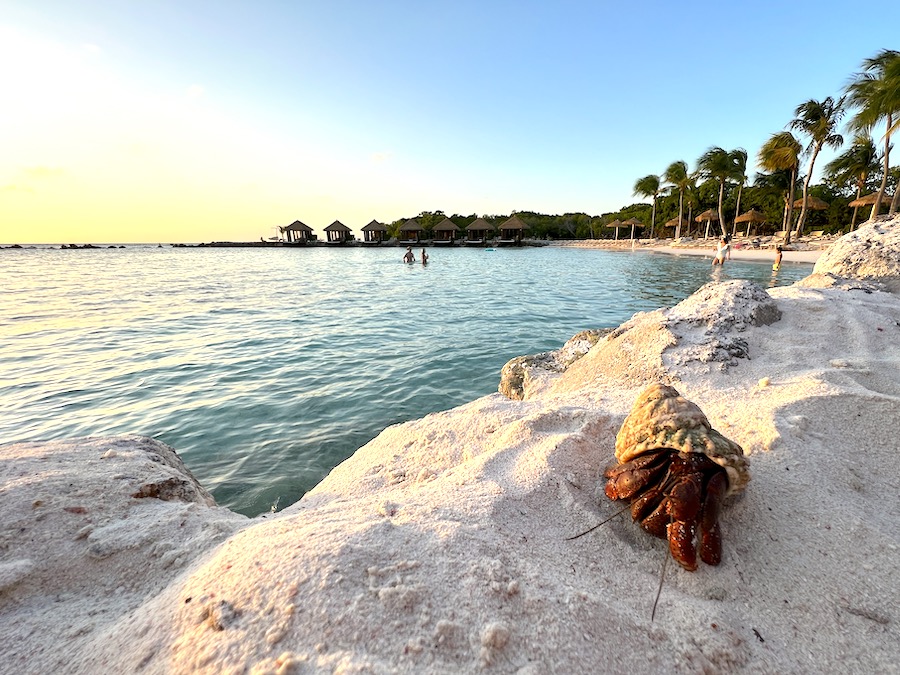
Flamingo Beach isn’t a spontaneous stop. It takes planning, and it costs more than most beach days in Aruba. If you go in knowing what it is and what it isn’t, it can be an enjoyable way to spend the day.
For us, it worked because we treated it exactly like that. A relaxed stretch in the sun, a few drinks, and a novelty that feels different from the rest of the island. Aruba’s public beaches are still excellent. Flamingo Beach simply offers something else.